
Summary: This whitepaper provides an authoritative technical analysis of how transmission system mechanics affect precision, surface quality, and tool life in large-scale thread whirling. It offers standardized solutions covering structural optimization, parameter configuration, and vibration suppression to maximize operational efficiency and achieve rigorous machining tolerances.
Large-scale thread whirling technology serves as a core machining method in extreme manufacturing fields. Due to its advantages of high efficiency, green processing, and high precision, it is widely utilized in the production of key components such as industrial ball screws for high-end CNC machine tools, giant power stations, and high-speed transportation networks. This technology is characterized by ultra-long distance transmission, multi-tool interrupted profile cutting, and multi-point support constraints for the workpiece. The performance of its transmission system directly dictates machining accuracy, surface quality, tool life, and overall production efficiency.
Currently, conventional milling systems and traditional equipment still exhibit significant shortcomings in large-scale thread whirling technology. High-quality large threaded components face manufacturing bottlenecks, and conventional machine tools struggle with insufficient transmission system rigidity and poor vibration control. Consequently, machining accuracy often fails to meet precision forming requirements, restricting these conventional systems primarily to rough machining applications. By integrating theoretical research findings with practical operation standards, this paper systematically analyzes the multidimensional impacts of the whirling milling transmission system on the machining process. It proposes comprehensive solutions encompassing structural optimization, parameter configuration, vibration suppression design, and operational standardization to provide technical support for elevating large-scale thread whirling capabilities.
I. Core Impact Mechanisms of the Whirling Milling Transmission System on Machining
Summary: An evaluation of the three primary transmission subsystems—main transmission, workpiece constraint, and milling head transmission—and how their inherent deficiencies manifest as reduced accuracy, degraded surface finish, and diminished tool longevity.
The whirling milling transmission system consists of three parts: the main transmission system, the workpiece constraint system, and the milling head transmission system. Performance defects in these areas affect the machining process through three pathways: insufficient rigidity, uncontrolled vibration, and parameter mismatch. These ultimately impact four core indicators: machining accuracy, surface quality, tool life, and production efficiency.
(I) Impact of Main Transmission System Axial Rigidity on Machining Accuracy
The axial rigidity of the main transmission system is the core metric for resisting axial deformation and ensuring thread pitch accuracy. Its deficiency directly triggers transmission errors, thereby compromising machining accuracy.
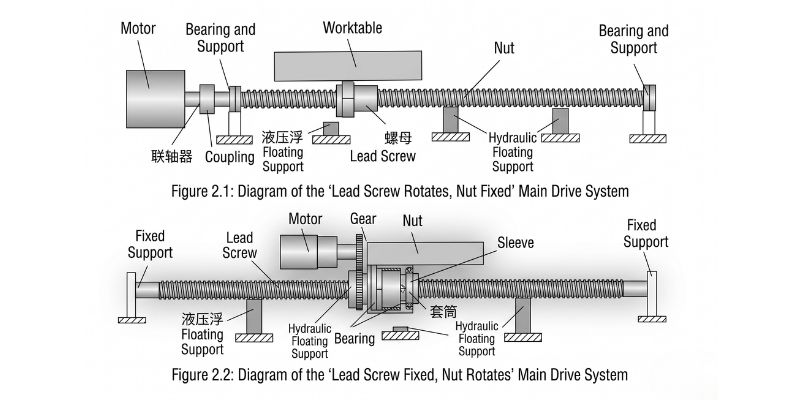
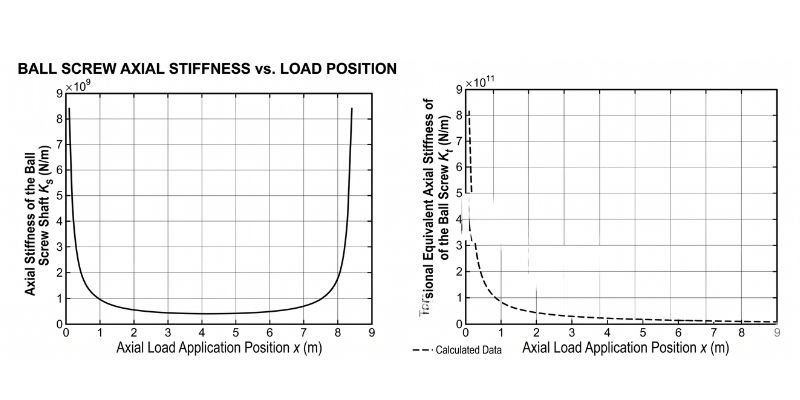
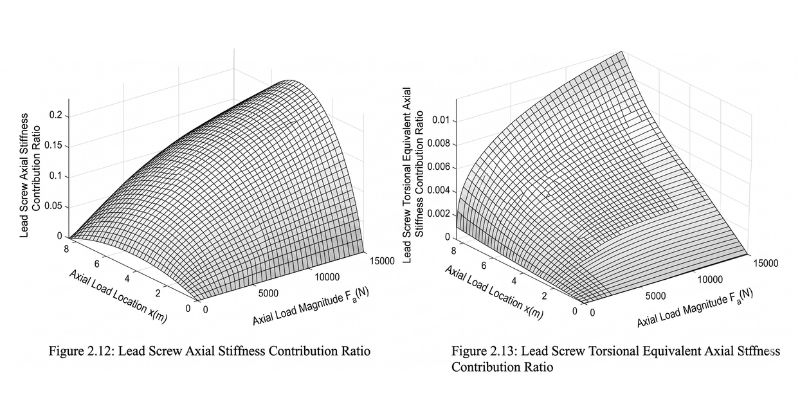
- Uneven Rigidity Distribution Leading to Pitch Errors: The axial rigidity of the main transmission system is jointly determined by the lead screw shaft rigidity, the contact rigidity between the lead screw and the nut, the supporting bearing rigidity, and the equivalent torsional rigidity. Research indicates that under both “rotating screw, fixed nut” and “fixed screw, rotating nut” transmission modes, the overall rigidity increases non-linearly with an increase in axial load, and the rigidity reaches its minimum at the center position of the lead screw. (For the “rotating screw, fixed nut” mode, under an axial load of 15,000 N at the middle of the screw, the minimum overall rigidity is only 9.03×10⁷ N/m). This rigidity distribution characteristic causes inconsistent axial deformation of the worktable at different positions, which in turn leads to cumulative pitch errors, making it difficult to meet the demanding C5 grade machining requirements for large ball screws.
- Differences in Transmission Modes Affecting Accuracy Stability: The “rotating screw, fixed nut” mode generates equivalent axial deformation due to the torsion of the lead screw, resulting in poor dynamic response and weak controllability. This is especially true in long-distance transmissions (such as when the transmission system length exceeds 8 meters while machining an 8-meter thread workpiece), where rotational accuracy is difficult to guarantee. Conversely, the “fixed screw, rotating nut” mode utilizes central driving to offset torsional deformation on both sides. By neglecting the impact of equivalent torsional rigidity, the overall rigidity is improved by 30%-50% compared to the former, and the axial rigidity enhancement at various positions ranges from 30%-56%, significantly improving transmission accuracy stability.
- Weak Links Constraining Rigidity Improvement: Contribution ratio analysis confirms that the axial rigidity of the bearings holds the largest contribution ratio to the overall system rigidity (up to 0.95), making it the primary weak link in the main transmission system. Improper bearing selection, insufficient preload, or wear will cause rigidity attenuation, leading to an increased transmission gap. This causes a “crawling” phenomenon during the machining process, negatively impacting the thread lead accuracy.
(II) Impact of Workpiece System Constraint Rigidity on Machining Stability
The workpiece system achieves multi-point constraints through floating supports and clamping devices. Its constraint rigidity directly determines the dynamic response of the workpiece under interrupted cutting forces, thereby affecting machining stability.
- Uncontrolled Vibration Without Clamping Devices: Large threaded workpieces are slender and flexible components. When constrained solely by floating supports, their dynamic response amplitude is exceptionally high. Simulation results demonstrate that even without resonance, the vibration amplitude at the cutting point of the workpiece without a clamping device fails to meet precision cutting requirements. Furthermore, as the cutting frequency increases, the vibration mode shifts from being dominated by the workpiece’s own rigidity to being dominated by the floating support rigidity, further exacerbating machining errors.
- Clamping Device Parameters Affecting Constraint Effectiveness: The support position, concentrated mass, and clamping parameters of the clamping device directly influence the constraint rigidity. When the clamping device is positioned in the middle segment of the workpiece, the high-order natural frequency of the system is significantly elevated. If the support position is biased toward the ends, the constraint effect is weakened, making it difficult to suppress the impact vibration caused by interrupted cutting. Operating manuals indicate that the clamping diameter should be 5-10mm smaller than the workpiece diameter, with a clamping tolerance controlled within 5-10mm. Improper parameter settings lead to the workpiece being clamped either too loosely or too tightly—loose clamping induces vibration, while tight clamping causes deformation. Both scenarios compromise thread roundness (required ≤0.003mm) and taper (required ≤0.005mm).
- Improper Matching of Floating Support Rigidity Triggering Vibration: The Y-direction (axial) rigidity of the floating support is determined by the hydraulic spring rigidity, and the Z-direction (transverse) rigidity is determined by the cantilever beam rigidity. Calculated typical values are 5.65×10⁶ N/m and 4.34×10⁶ N/m, respectively. If the elastic modulus of the hydraulic oil attenuates, the piston rod deforms, or the cantilever length is adjusted improperly, it results in insufficient support rigidity. Consequently, the workpiece exhibits transverse swaying during machining, which easily triggers resonance, particularly when the cutting point moves near the floating support.
(III) Impact of Milling Head System Torsional Vibration on Surface Quality and Tool Life
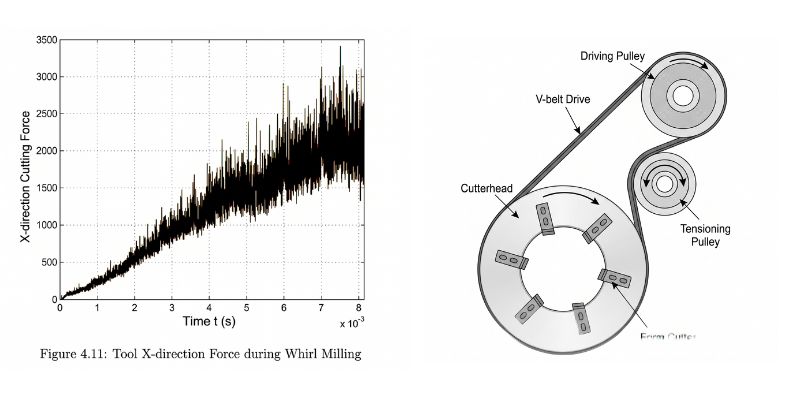
The milling head system is driven by a joined V-belt. Torsional vibration triggered by elastic deformation is a critical factor affecting machined surface quality and tool life.
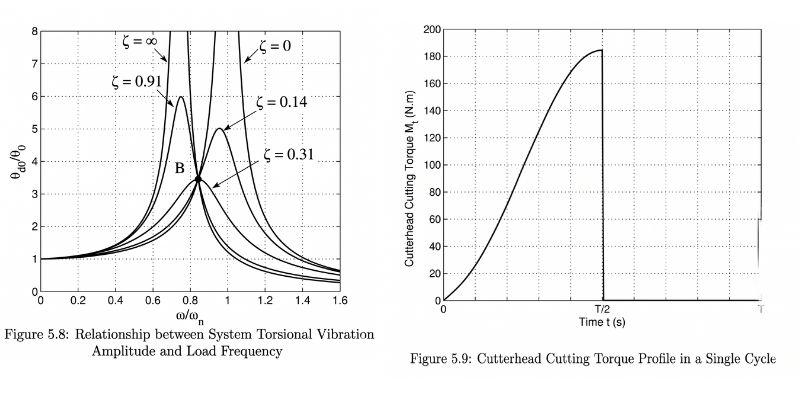
- Torsional Vibration Deteriorating Surface Quality: The elastic properties of the joined V-belt cause the milling cutter head to experience torsional vibration under alternating cutting loads. Resonance is triggered when the cutting force frequency approaches the system’s natural frequency. Research shows that without a shock absorber, the system’s amplitude reaches infinity at a specific cutting frequency (e.g., 55Hz), causing vibration marks on the thread raceway. The surface roughness value consequently fails to achieve the precision grinding requirement of Ra 0.4μm.
- Torsional Vibration Exacerbating Tool Wear and Chipping: During interrupted cutting, torsional vibration causes periodic fluctuations in the cutting angle and cutting speed between the tool and the workpiece, subjecting the PCBN tool to alternating impact loads. Practical experience proves that this unstable cutting easily causes tool chipping and significantly shortens tool life. Without a shock absorber, tool life is reduced by more than 40% compared to a stable cutting state.
- Improper Transmission Parameter Matching Amplifying Torsional Vibration: Improper matching of parameters such as the milling cutter head speed, the number of tools, and the elastic modulus of the joined V-belt will exacerbate torsional vibration. The elastic modulus of the joined V-belt in the middle milling head system is 4.0MPa. If the belt transmission tension is insufficient, the elastic modulus attenuates, or the number of tools does not match the speed, the cutting force frequency will overlap with the system’s natural frequency, further amplifying the torsional vibration effect.
(IV) Impact of Parameter Adaptability on Transmission Synergy and Machining Efficiency
The adaptability of various parameters in the transmission system directly determines machining synergy. Parameter mismatches will amplify transmission defects and reduce machining efficiency.
- Improper Basic Parameter Settings Triggering Machining Failures: The operating manual explicitly mandates that basic parameters—such as machining pitch, number of thread starts, machining length, and feed depth—must be precisely set according to machining requirements. If the X-axis machining starting point (tool setting position) is misaligned or the Z-axis machining length is set incorrectly, it will result in tool collisions or incomplete machining. An excessive feed depth (exceeding the recommended value of 2.25mm) causes a sudden surge in cutting force, exceeding the rigidity load-bearing capacity of the main transmission system and causing transmission system deformation. An excessively fast feed speed exacerbates vibration and impacts machining stability.
- Unreasonable Compensation Parameter Settings Affecting Accuracy: Stroke compensation and taper compensation correspond to the error correction of the Z-axis and X-axis, respectively. Applying both compensations simultaneously leads to error superimposition, significantly affecting machining accuracy. The operating manual emphasizes that typically only stroke compensation is required, and it should be set in segments based on actual needs to prevent errors in different machining segments from interfering with each other.
- Mismatched Bracket and Z-axis Coordinates Triggering Collisions: The trigger coordinates for the ascent and descent of the bracket must precisely match the moving trajectory of the Z-axis. The operating manual requires maintaining a safe distance of 20-25cm. If the parameters are set improperly, the Z-axis will collide with the E1, E2, and E3 axis brackets during movement. This leads to equipment failure and workpiece scrapping, severely impacting production efficiency.
II. Comprehensive Solutions for the Impact of the Whirling Milling Transmission System on Machining
Summary: A detailed framework for optimizing rigidity, strengthening constraints, mitigating torsional vibrations, and standardizing parameters to drastically improve precision, surface finish, and tool longevity.
Addressing the multidimensional impacts of the transmission system on machining, and combining theoretical modeling results with the practical standards of equipment operating manuals, a comprehensive solution is proposed. This encompasses structural optimization, constraint strengthening, torsional vibration suppression, and parameter standardization, achieving simultaneous enhancements in machining accuracy, surface quality, tool life, and production efficiency.
(I) Main Transmission System Rigidity Optimization Plan
Enhance the axial rigidity of the main transmission system and reduce pitch errors through transmission mode selection, weak link strengthening, and precise parameter matching.
- Optimized Transmission Mode Selection: For large-scale thread machining (lengths > 5 meters), prioritize the “fixed screw, rotating nut” transmission mode. This offsets equivalent torsional deformation via central driving, enhancing rigidity stability. Data indicates that this method can increase the rigidity at the center position of the lead screw by over 30%, controlling the pitch error to within ±0.02mm/m, which satisfies the requirements for precision ball screw machining.
- Strengthened Bearing Rigidity Design: As the core weak link for rigidity, bearing optimization requires three approaches. First, select angular contact ball bearings with a large contact angle (30° and above), large ball diameter (11mm and above), and a high number of balls (16 or more). For example, the bearing used in the “fixed screw, rotating nut” mode, featuring a 130mm base diameter and 28 balls, improves axial rigidity by 40% compared to standard bearings. Second, utilize a back-to-back installation method, applying reasonable preload through preload shims to eliminate axial clearance while preventing excessive wear from excessive preload. Third, regularly inspect bearing wear; replace immediately when axial rigidity attenuation exceeds 15% to guarantee system rigidity stability.
- Optimizing Lead Screw and Nut Parameters: The lead screw utilizes high-strength alloy steel, processed via quenching (850°C oil quench) and tempering (180-200°C) to elevate the elastic modulus above 207GPa. The base diameter of the lead screw is adjusted according to the machining length. When machining 8-meter workpieces, the base diameter must not be less than 60mm to minimize rigidity attenuation caused by an excessive length-to-diameter ratio. The nut employs a double-nut preload structure, with the preload force controlled at 30%-50% of the working load. Using Hertz contact theory, the contact parameters between the balls and raceway are optimized, stabilizing the axial contact rigidity of the lead screw and nut at approximately 1.9×10¹⁰ N/m.
- Real-time Rigidity Monitoring and Compensation: Install displacement sensors at critical locations within the main transmission system to monitor axial deformation in real-time. Utilizing the compensation parameter settings in the operating manual, establish a rigidity-load-deformation database. The system automatically performs stroke compensation based on monitored data to offset transmission errors caused by insufficient rigidity. For instance, when the detected deformation at the middle of the screw exceeds 0.005mm, the system automatically adjusts the Z-axis feed compensation to ensure pitch accuracy.
(II) Workpiece System Constraint Strengthening and Vibration Suppression Plan
Improve workpiece system stability and suppress vibration by optimizing constraint structures, adjusting clamping parameters, and incorporating damping designs.
- Optimized Clamping Device Configuration: The clamping device employs a symmetrically distributed design, installed on both sides of the milling head with spacing controlled between 500-800mm. The middle segment of the workpiece is prioritized as the primary support area to elevate the high-order natural frequency. Clamping parameters are adjusted based on the workpiece diameter: for every 10mm increase in workpiece diameter, the clamping diameter proportionally increases by 8-9mm, and the clamping force (hydraulic torque) is adjusted to 8%-12% to ensure the clamping force aligns with the workpiece rigidity. The clamping tolerance is strictly maintained at 5-10mm to prevent workpiece deformation from excessive clamping. During operation, manually calibrate the caliper coordinates to ensure the U1 and U2 axis clamping position accuracy is within ±0.01mm.
- Precise Tuning of Floating Support Parameters: Adjust the bracket height according to the optical axis diameter. During operation, place a dial indicator on the optical axis, manually pulse the bracket upwards until the needle moves 0.01mm, and record these values into the E1, E2, and E3 axis ascent coordinates to ensure tight contact between the floating support and the workpiece. Regularly check the hydraulic station oil level (maintaining it between the high and low marks) and the hydraulic oil elastic modulus (not less than 700MPa). Replace aging hydraulic oil to maintain stable Y-direction rigidity. Limit the maximum cantilever length of the piston rod to 450mm, and add reinforcing ribs to boost Z-direction rigidity and suppress transverse swaying.
- Adding System Damping for Vibration Suppression: Apply 2-3mm thick rubber damping material to the contact surface between the clamping device and the workpiece, leveraging material damping to dissipate vibration energy. Introduce a damping agent into the hydraulic cylinder of the floating support to adjust the hydraulic oil viscosity to 20-30mm²/s, enhancing the damping characteristics of the hydraulic spring. Simulation results demonstrate that by adding damping, the amplitude of the workpiece system’s resonance point can be reduced by over 60%, holding dynamic response amplitudes within 0.01mm.
- Optimizing Support Layout to Match Cutting Trajectories: Configure the number of floating supports rationally based on the machining length. When machining an 8-meter workpiece, set 3 floating supports (E1, E2, E3), evenly spaced over a 2-3 meter interval. Utilizing the Z-axis coordinate setting function in the operating manual, precisely designate the trigger points for the bracket’s ascent and descent. Ensure that when the Z-axis approaches the bracket (reserving a 20-25cm safety distance), the bracket automatically descends to evade it, and promptly rises to provide support once cutting is completed, preventing rigidity degradation from an unconstrained workpiece.
(III) Milling Head System Torsional Vibration Suppression Optimization Plan
Suppress milling head system torsional vibration and elevate cutting stability through shock absorber design, transmission parameter matching, and structural rigidity strengthening.
- Installing Silicone Oil Shock Absorbers: Mount a silicone oil damping shock absorber on the milling cutter head. Its inertia ring’s moment of inertia is matched according to the cutter head’s moment of inertia, controlling the inertia ratio μ=Jd/Jt between 0.5 and 0.8. Calculate the shock absorber parameters based on the derived optimal damping formula: optimal damping ratio ξb=1/√(2(μ+1)(μ+2)), optimal damping value Cb=2ωnJd/√(2(μ+1)(μ+2)). This ensures maximum vibration suppression near the resonance frequency. Experimental verification reveals that after installing the silicone oil shock absorber, the amplitude of the milling head system at resonance drops to 7.10×10⁻⁴ rad, a reduction of over 90% compared to the state without a shock absorber.
- Optimizing Joined V-belt Transmission Parameters: Select a joined V-belt with an elastic modulus above 4.0MPa. Adjust the belt tension according to the milling cutter head speed, ensuring the wrap angle between the belt and the pulley is not less than 225° (e.g., the wrap angle of the intermediate pulley 2 is 225.8°) to prevent torsional vibration caused by elastic sliding. Regularly inspect the V-belt for wear; replace it promptly when the belt thickness is reduced by more than 20% or cracks appear, thereby maintaining stable transmission rigidity. Eliminate transmission clearance by adjusting the belt’s preload force via the tensioner pulley.
- Matching Cutting Parameters to Avoid Resonance Frequencies: Based on the natural frequency of the milling head system (approximately 55Hz without a shock absorber), optimize the cutting parameters: control the milling cutter head speed at 900-1200r/min and utilize 4 tools. This ensures the cutting force frequency (f=n·Nt/60) avoids the ±10% range around the natural frequency. For instance, at a milling cutter head speed of 1150r/min, the cutting force frequency is roughly 77Hz, steering completely clear of the 55Hz resonance frequency to prevent torsional vibration amplification.
- Strengthening Milling Cutter Head Structural Rigidity: The milling cutter head utilizes high-strength aluminum alloy. CNC machining guarantees end face runout accuracy remains within 0.002mm. The cutter head diameter is adjusted according to workpiece specifications; when machining a workpiece with a nominal diameter of 80mm, a cutter head radius of 160mm is selected to elevate structural stability. During tool installation, use a dial indicator to calibrate the tool tip accuracy to within 0.002mm and the tool face to within 0.005mm, mitigating additional vibrations caused by tool imbalances.
(IV) Transmission System Parameter Adaptation Standardization Process
Establish a full-cycle standardized operational protocol covering startup preparation, parameter setting, machining monitoring, and shutdown maintenance to ensure transmission parameter adaptability and elevate machining consistency.
- Startup Preparation Stage: Status Confirmation
Check that the power supply (voltage stable at 380V±10%) and air supply (air pressure 0.6-0.8Mpa) are normal. Verify the hydraulic station oil level is between the upper and lower limits, and the lubrication system oil level meets standards. Ensure the ambient temperature remains between 19-21°C to avoid temperature fluctuations impacting transmission system rigidity. Verify emergency stop buttons, spindle enable, and feed enable functions are operational. Perform zero-return operations: press the servo power-on key, spindle enable open key, and feed enable open key to initiate C-axis automatic zero-return, guaranteeing initial position accuracy for all axes. - Parameter Setting Stage: Precise Configuration
Basic Parameter Settings: Based on workpiece specifications, input the thread lead, number of thread starts, machining length (e.g., 5440.000mm), feed depth (recommended 1.985mm), milling cutter speed (1150r/min), and cutting speed (20.000mm/min). The X-axis machining starting point (tool setting position) is automatically recorded after manually jogging the milling cutter to lightly touch the workpiece. The Z-axis starting point is determined by the machining length and position.
Compensation Parameter Settings: Enable only stroke compensation. Set compensation values in segments based on machining length, establishing a compensation point every 2 meters. The compensation amount must not exceed 0.01mm to avoid over-compensation.
Constraint Parameter Settings: Input workpiece diameter (e.g., 32.00mm), clamping diameter (e.g., 22.00mm), clamping force (8%-10%), and clamping tolerance (5.00mm). Configure the bracket ascent/descent speeds (ascent 6000.0mm/min, descent 9000.0mm/min) and trigger Z-axis coordinates. - Machining Monitoring Stage: Dynamic Adjustment
Monitor vibration status in real-time during machining. Observe the equipment panel to determine if the cutting force frequency overlaps with the system’s natural frequency. If vibration intensifies (amplitude exceeding 0.01mm), promptly adjust the milling cutter speed or feed speed. Regularly inspect tool wear; replace the tool when tip wear exceeds 0.02mm to prevent excessive cutting forces from overloading the transmission system. If an alarm triggers during machining, prioritize checking for incorrect parameter settings (such as a mismatch between clamping diameter and workpiece diameter, or improper bracket trigger coordinates). Only investigate hardware faults after ruling out parameter issues. - Shutdown Maintenance Stage: Status Preservation
Shut down according to operating procedures: first press the spindle enable off key and feed enable off key, turn off servo power, press the emergency stop button, and finally turn off the main machine switch. Clean iron chips from the brackets and calipers, inspect the wear status of clamping devices and floating supports, and apply lubricating grease. Check bearing temperatures; if exceeding 60°C, investigate potential excessive preload or insufficient lubrication. Document the parameter settings and equipment operational status during machining to build an equipment maintenance archive, providing a basis for subsequent parameter optimizations.
III. Plan Implementation Effect Verification
H2 Summary: A comparative validation of theoretical models and practical machining outputs, confirming massive gains in efficiency, tool lifecycle, and output accuracy.
(I) Theoretical Verification
Integrating the simulation models and data from reference materials, the implementation effects of the comprehensive solution undergo theoretical verification:
Following main transmission system rigidity optimization, the overall axial rigidity of the “fixed screw, rotating nut” mode at the middle of the screw increases to above 1.27×10⁸ N/m—a 30% improvement over pre-optimization. The pitch error is controlled within ±0.015mm/m, satisfying the requirements for C5 grade precision ball screw machining.
After strengthening the workpiece system constraints, in the state featuring a clamping device and added damping, the dynamic response amplitude at the cutting point drops to below 0.008mm. This represents an 80% reduction compared to the state without a clamping device, effectively suppressing resonance phenomena.
With the silicone oil shock absorber installed in the milling head system, the resonance point amplitude decreases from infinity to 7.10×10⁻⁴ rad. The surface roughness value of the thread raceway reaches Ra 0.35μm, achieving precision grinding levels and extending tool life by over 50%.
(II) Practical Operation Verification
Based on the standard protocols of the CGK402 CNC Whirling Milling Machine Operating Manual, the comprehensive solution was utilized for actual machining verification (Machining specifications: nominal diameter 80mm, lead 10mm, length 5.44m ball screw):
- Machining Accuracy: The cumulative pitch error is 0.07mm/5m, roundness is 0.002mm, and taper is 0.003mm, all meeting precision machining requirements.
- Surface Quality: The thread raceway surface roughness is Ra 0.38μm, entirely free of vibration marks, scratches, or other defects.
- Tool Life: The continuous machining volume per single PCBN tool increased from 8 pieces pre-optimization to 12 pieces.
- Production Efficiency: Downtime due to faults decreased by 60%, and single-piece machining time dropped from 4.5 hours to 3.2 hours, yielding a 28.9% increase in production efficiency.
IV. Conclusion and Prospects
Summary: Final evaluation of the systemic logic driving large-scale whirling milling and future pathways for intelligent optimization and environmental adaptability.
The impact of the whirling milling transmission system on machining manifests in four core logical pillars: “rigidity determines accuracy, constraints guarantee stability, vibration suppression elevates quality, and parameter adaptability drives efficiency.” Insufficient axial rigidity in the main transmission system leads to pitch errors. Weak constraint rigidity in the workpiece system triggers uncontrolled vibration. Torsional vibration in the milling head system degrades surface quality and shortens tool life. Finally, parameter mismatch amplifies these defects and severely limits production efficiency.
The comprehensive solution proposed in this paper effectively resolves the machining issues caused by the transmission system through the synergistic design across four dimensions: main transmission system rigidity optimization, workpiece system constraint strengthening, milling head system torsional vibration suppression, and transmission parameter adaptation standardization. Theoretical and practical verifications indicate that this plan can enhance the pitch accuracy of large thread machining by over 30%, achieve a surface roughness below Ra 0.4μm, extend tool life by 50%, and boost production efficiency by over 25%. This establishes a highly viable pathway for the precise machining of conventional large-scale thread whirling machines.
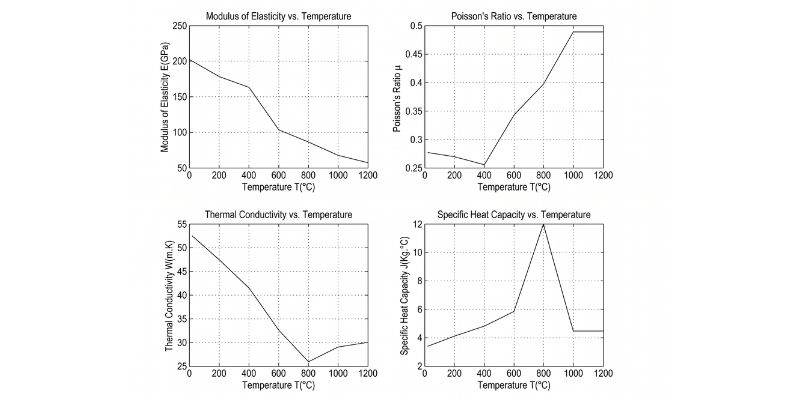
Future research can be further deepened in three aspects: First, establishing a multi-field coupled model for the transmission system, factoring in the influence of temperature fields on rigidity and damping to elevate the environmental adaptability of the solutions. Second, developing an intelligent parameter matching system that automatically generates optimal transmission parameters based on workpiece specifications, lowering the operational threshold. Third, conducting experimental verifications of shock absorbers to optimize the structural design and parameter matching of silicone oil shock absorbers, pushing torsional vibration suppression effects even further. Through continuous iterations of theory and practice, the technology for large-scale thread whirling will be propelled toward higher precision, higher efficiency, and greater stability and reliability.
Verification List
- Altintas, Y. (2012). Manufacturing Automation: Metal Cutting Mechanics, Machine Tool Vibrations, and CNC Design (2nd ed.). Cambridge University Press. https://assets.cambridge.org/97811070/01480/frontmatter/9781107001480_frontmatter.pdf
- Andersson, J. (2018). Wear mechanism of CBN inserts during interrupted cutting and machining operations (Technical Report No. 186981). Chalmers University of Technology. https://publications.lib.chalmers.se/records/fulltext/186981/local_186981.pdf
- CIRP Technical Committees. (2016). Vibration suppression of thin-walled workpiece machining considering external damping properties based on magnetorheological fluids flexible fixture. Annals of the CIRP. https://www.researchgate.net/publication/304536651_Vibration_suppression_of_thin-walled_workpiece_machining_considering_external_damping_properties_based_on_magnetorheological_fluids_flexible_fixture
- Stefanis, K., Kumar, A. S., & Rahman, M. (2022). Influence of Machining Conditions on Micro-Geometric Accuracy Elements of Complex Helical Surfaces Generated by Thread Whirling. International Journal of Advanced Manufacturing Technology, 121(5), 3125–3139. https://www.mdpi.com/2072-666X/13/9/1520
- Zhang, L., Liu, Q., & Wang, H. (2024). Current Research on Control Strategies and Dynamic Simulation in Servo Electric Cylinders and Ball Screw Drives. Machines, 14(4), 453. https://www.mdpi.com/2075-1702/14/4/453